
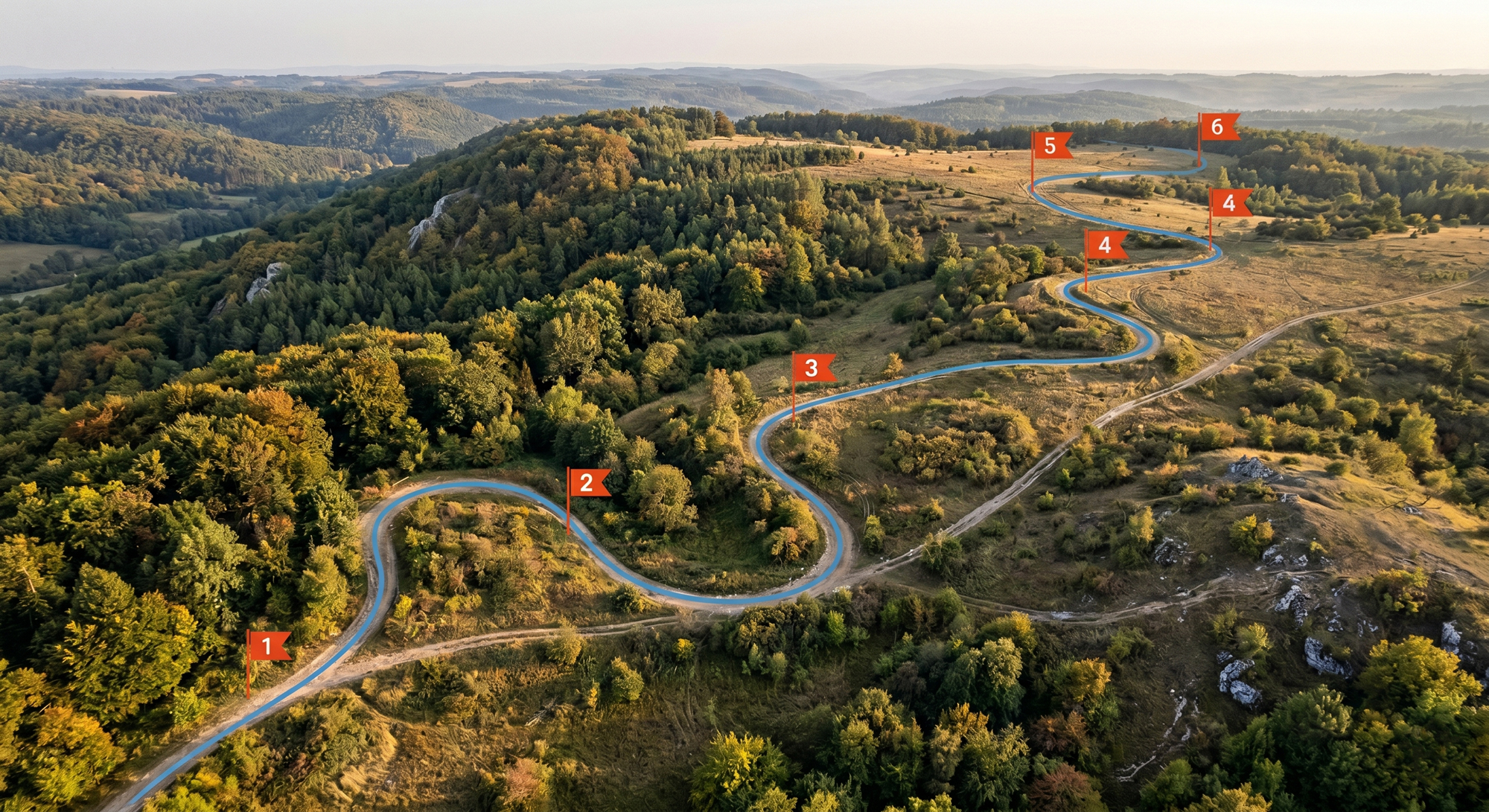
The 6 Stages of the Customer Journey Every Marketing Plan Must Include
A marketing funnel treats customers like numbers. A customer journey treats them like people. Here are the six stages every customer moves through, what happens at each one, and why your marketing needs to account for all of them.
What Is a Customer Journey?
A customer journey maps every interaction a person has with your brand from the moment they first hear about you to the moment they tell someone else about you. Unlike a traditional marketing funnel, which only measures movement toward purchase, the customer journey continues after the sale and tracks the experiences that turn buyers into brand advocates.
The 6 Stages of the Customer Journey
Stage 1: Awareness
Also called: discovery, engagement, stimulus
A potential customer encounters your brand for the first time. They may have seen an ad, heard a friend mention you, or come across a post while scrolling. They are now aware you exist but have not taken any action yet. Your goal at this stage is to make a strong enough impression that they take the next step.
Stage 2: Research
Also called: consideration, education, evaluation, ZMOT
When a customer becomes aware of your brand and has a potential need, they start researching. Google calls this the Zero Moment of Truth (ZMOT): the moment a person searches for information before making a purchase decision. It happens before almost every transaction today. Being findable and credible during this research phase is critical. If you are not showing up here, a competitor probably is.
Stage 3: Purchase
Also called: conversion, activation, First Moment of Truth
The customer has done their research, decided your brand is the right fit, and made a purchase. This is a significant moment. But it is not the finish line. Many marketing models stop here. That is a costly mistake.
Stage 4: Adoption
Also called: Second Moment of Truth, onboarding
The customer now has your product or service. What is their experience? Does it live up to the promise? Is it easy to use? Does opening the box feel special or forgettable? Apple has made post-purchase experience a competitive advantage — every layer of packaging and setup reinforces that the buyer made a great decision. The question at Adoption is simple: did this brand deliver on what it promised?
Stage 5: Retention
Also called: repeat customer, brand marriage, ongoing engagement
Will the customer buy again? Will they continue to find value over time? Managing the customer experience does not end at purchase. Your warranty policy, customer service, follow-up emails, and product quality all influence whether a customer stays or leaves.
Stage 6: Advocacy
Also called: evangelist, enthusiast, brand ambassador
This is the most valuable stage in the entire journey. An advocate tells others about your brand without being paid to do so. They share their experience, answer questions, and bring new customers into the top of your funnel. Organic advocacy is exponentially more persuasive than any ad you can run.

How to Map the Customer Journey for Your Brand
Start with the six stages above and then add the specific steps unique to your product or service. The six stages are the main stops, but the most useful customer journey maps are the ones that get more granular.
For example, a client who makes custom in-ear monitors for live musicians has several steps between Purchase and Adoption: the customer schedules ear impressions, sends a mold, and then waits while the monitors are custom-made. What happens in those steps directly influences whether Adoption feels like a premium experience or an anxious one. Those steps belong on the map.
What are the unique steps a customer takes with your product? Start with the six-stage framework and add the specific vistas along the journey that are distinct to your brand.
For each stage, identify:
- What does the customer need from you at this moment?
- What content, channel, or experience supports them here?
- Is this a paid, earned, or owned touchpoint?
The paid, earned, and owned distinction matters here. Some touchpoints cost money. Some cost time. Some you can control directly. Knowing which is which tells you what to prioritize and what gets cut first when budgets tighten. For more on how paid, earned, and owned efforts work together, see our post on building your marketing strategy.
One more thing: do not let your customer journey map be static. It will change and fluctuate as your brand grows, your audience evolves, and new channels emerge. Revisit it regularly and update it when the journey your customers actually take no longer matches the one you mapped.
Map Your Own Customer Journey — Free Template
We built a printable customer journey template you can use to map every stage for your own brand, including the custom steps unique to your product or service. Download it free along with the full marketing strategy template set.
Frequently Asked Questions
What is the difference between a customer journey and a marketing funnel?
A marketing funnel is linear and ends at purchase. A customer journey is non-linear and continues through Retention and Advocacy. The journey gives equal weight to the post-purchase experience, which is where loyalty and word-of-mouth are built.
What is ZMOT?
ZMOT stands for Zero Moment of Truth. Coined by Google, it describes the research phase customers go through before making a purchase. Brands that show up consistently during this phase win a disproportionate share of purchases.
How many stages should my customer journey have?
Start with the six core stages: Awareness, Research, Purchase, Adoption, Retention, and Advocacy. Then add the intermediate steps specific to your product or service. A custom product with a waiting period between Purchase and Adoption needs those steps on the map. A subscription service may need a distinct Onboarding stage. Let the actual customer experience drive the number of stages.
What happens if I ignore the Retention and Advocacy stages?
You leave significant growth on the table. A retained customer costs less to serve than a new one. An advocate generates new customers at zero acquisition cost. Ignoring these stages means constantly re-spending to replace customers who should have stayed.
What happens if I ignore the Retention and Advocacy stages?
You leave significant growth on the table. A retained customer costs less to serve than a new one. An advocate generates new customers at zero acquisition cost. Ignoring these stages means constantly re-spending to replace customers who should have stayed.
The Bottom Line? The customer journey does not end at purchase. Build a system that moves people all the way to Advocacy and your happiest customers become your best marketing channel.